Brick & Stone Soft Washing
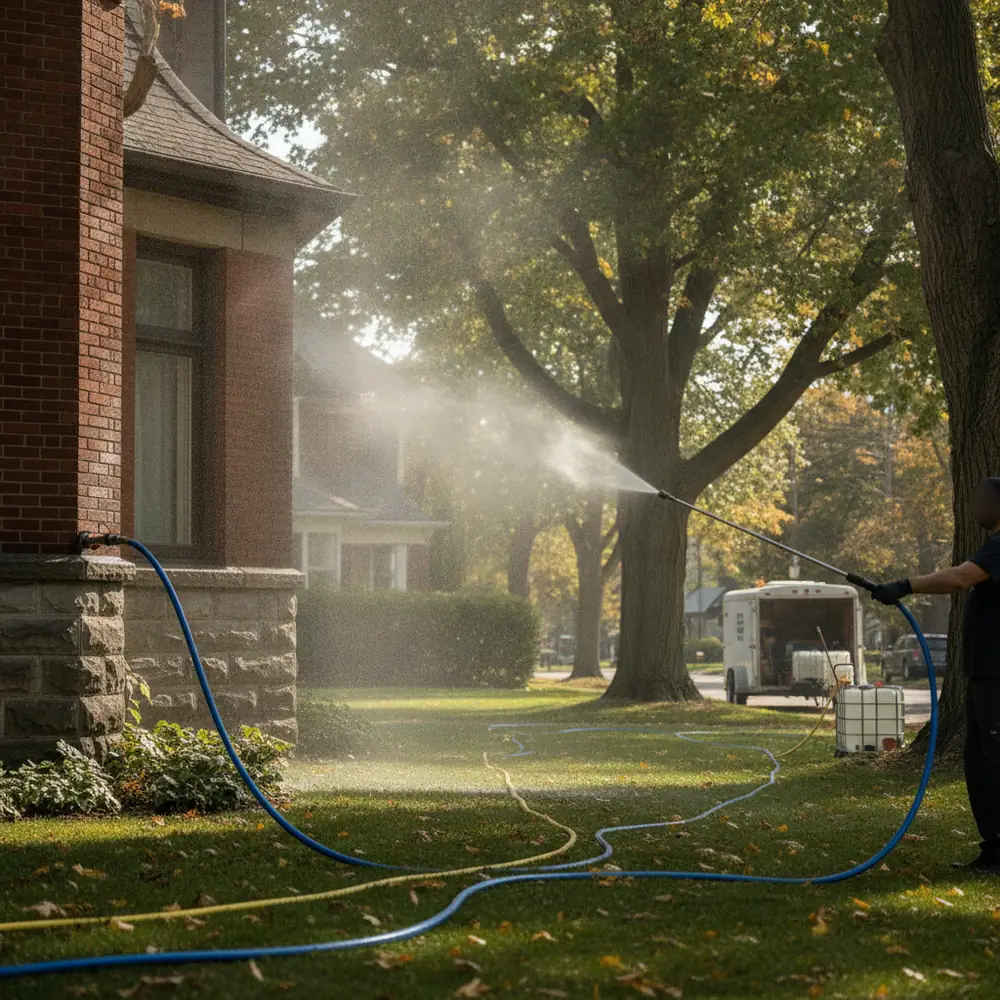
Older brick homes across Guelph and the Tri-Cities often have mortar joints that have already weathered decades — high-pressure washing can erode that mortar further and force moisture into the wall assembly. Soft washing cleans effectively without that risk, which matters even more on heritage-era properties.
Natural stone gets similar treatment: the right cleaning solution for the specific stone type lifts grime and biological growth without the abrasive effect of high-pressure water on a porous surface.
- Protects mortar joints from high-pressure erosion
- Solution matched to brick vs. natural stone
- Safe for older, heritage-era masonry
- Removes efflorescence staining where present
What it costs in Guelph
- Standard brick home: $300–$500
- Natural stone (extra care required): $400–$700
- Heritage-era masonry: priced individually on assessment
Brick & Stone Soft Wash FAQs
Is this safe for older, century-home brick?
Yes — soft washing is specifically chosen over pressure washing for older masonry precisely because it doesn't stress aging mortar joints the way high pressure can.
What is efflorescence and can you remove it?
It's the white, chalky mineral deposit that sometimes appears on brick and stone from moisture moving through the material — soft washing can improve its appearance, though severe cases may need a specialized masonry cleaner as a follow-up.
How often should brick be cleaned?
Every 2–3 years is typical, though shaded or heavily treed properties may need it sooner.
Will this affect the mortar colour or texture?
No — soft washing at proper dilution and pressure doesn't strip or discolour mortar the way abrasive high-pressure cleaning can.